Why the Chimney Liner Is the Most Important Part of Your Fireplace System
Most homeowners can picture a chimney: brick and mortar rising from the roofline, a firebox inside the house, a damper that opens and closes. What's easy to overlook — because it's completely hidden inside the chimney structure — is the flue liner. Yet the liner is the single most critical safety component in the entire system.
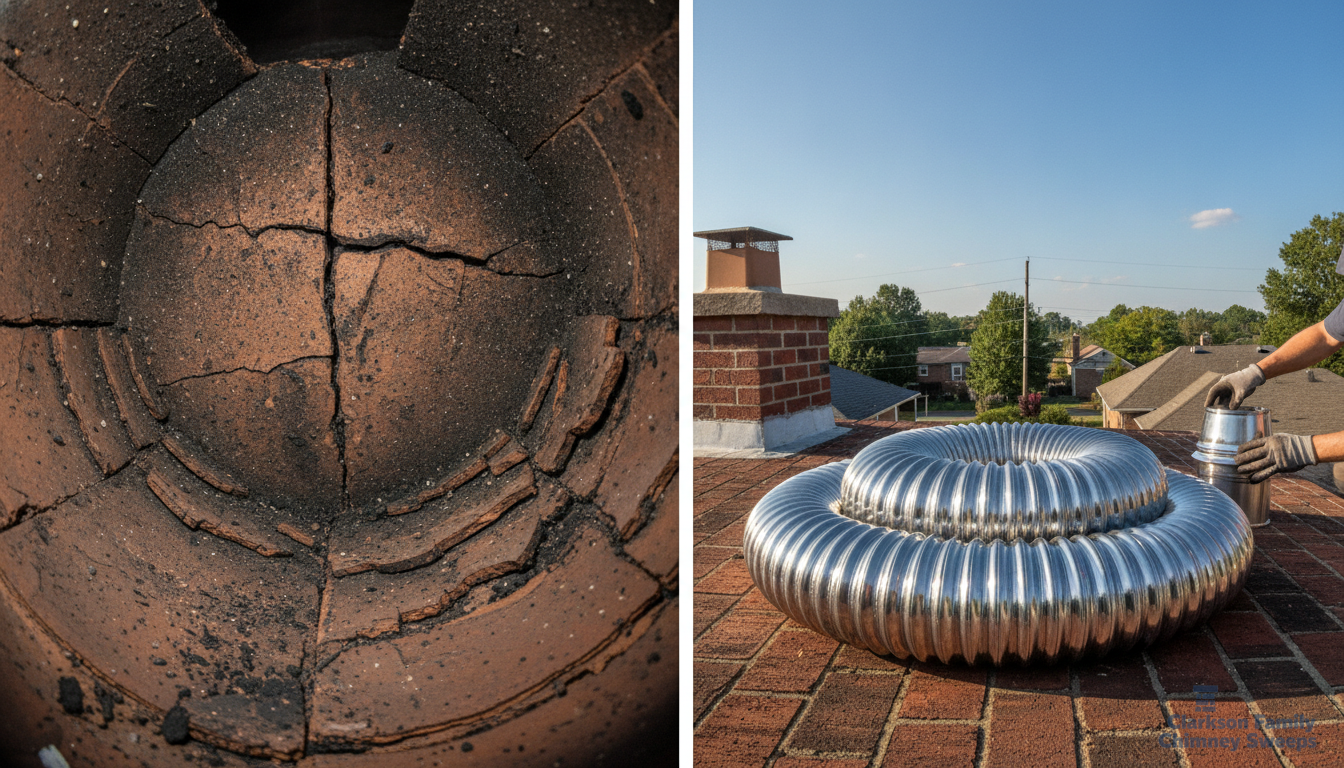
The liner's job is to contain combustion byproducts — superheated gases, carbon monoxide, and the sparks that accompany an active fire — and channel them safely out of your home. When the liner is cracked, deteriorated, or missing entirely, those combustion gases have a direct pathway through the surrounding masonry into the wood framing and living spaces of your home. The result can be a slow carbon monoxide leak, a chimney fire that spreads to structural framing, or both.
At Clarkson Family Chimney Sweeps, liner-related problems are among the most common serious findings we encounter during inspections across Charlotte and Mecklenburg County — particularly in the city's older, beloved neighborhoods.
Charlotte's Older Neighborhoods: Beautiful Homes, Aging Liners
Neighborhoods like Dilworth, Plaza Midwood, Myers Park, and Cotswold are home to some of Charlotte's most architecturally significant housing stock — bungalows, Craftsman cottages, Colonial Revivals, and mid-century ranches, many of them 60 to 100 years old. These homes are deeply desirable, and their original masonry fireplaces are a major part of their charm.
The challenge is that the clay tile liners installed in most of these chimneys were never designed to last indefinitely. Every fire creates a thermal expansion-contraction cycle as the liner heats to hundreds of degrees and then cools. Over decades — and hundreds or thousands of fires — this cycling causes hairline cracks in the tile joints, full tile separations, and the gradual erosion of the mortar that holds tile sections together. Charlotte's humidity accelerates this process by allowing moisture to infiltrate and expand inside already-stressed tile.
The result is that many chimneys in Charlotte's historic neighborhoods have liners with significant defects that their owners have no idea exist — because the damage is completely internal and invisible without a video inspection.
Warning Signs That Your Chimney Liner May Be Damaged
While only a professional video scan can definitively assess liner condition, certain symptoms suggest you should schedule an inspection promptly:
- A white haze or staining on interior walls near the chimney — This can indicate that flue gases are migrating through cracked liner sections and chimney masonry into the adjacent wall cavity.
- A persistent smoky smell in your home when the fireplace isn't in use — Residual odors seeping through the structure often point to liner gaps.
- Visible chunks of clay or tile debris in the firebox — If you're finding small fragments at the bottom of your firebox, sections of tile liner are deteriorating and falling.
- Carbon monoxide detector alerts — Any CO alarm in your home warrants immediate investigation of all combustion appliances, including your fireplace.
- Poor draft or smoky firebox — While draft problems have multiple causes, a damaged or deteriorated liner disrupts the airflow dynamics that draw smoke up and out of the flue.
If you notice any of these signs, the right first step is a professional chimney inspection — ideally a Level 2 with a video camera scan of the full flue interior.
Chimney Relining Options: What's Right for Your Home
If a video inspection reveals liner damage, the appropriate solution depends on the type and extent of deterioration. Clarkson Family Chimney Sweeps offers the following relining approaches:
- Flexible stainless steel liner installation: The most common and versatile solution. A continuous flexible steel liner — 316L alloy for gas appliances, 304 alloy for wood-burning systems — is inserted from the top of the chimney down to the firebox or appliance connection. It's sized precisely for your appliance's BTU output, ensuring proper draft and complete containment of combustion gases. Most installations are completed in a single day.
- Rigid stainless steel liner sections: Used in chimneys with a straight, unobstructed flue path, rigid liner sections offer maximum durability. They're particularly appropriate for straight-run chimneys common in certain Charlotte home styles.
- HeatShield Cerfractory Flue Sealant resurfacing: For clay tile liners with minor to moderate hairline cracking that don't yet require full replacement, HeatShield is a proven resurfacing system that fills cracks, restores the smooth interior surface of the flue, and extends liner life significantly at a lower cost than full replacement.
Our technicians explain all options clearly, with honest guidance about which approach provides the best long-term value for your specific chimney and appliance. Explore the full details of our chimney relining service, including liner sizing guidance and warranty information.
Gas Insert Conversions Require a New Liner — Every Time
One of the most common scenarios we encounter across SouthPark and other Charlotte neighborhoods where homeowners are upgrading older systems: a wood-burning fireplace is being converted to a gas insert, or a gas appliance is being connected to a flue that previously served a wood-burning system.
This situation almost always requires a new liner. Gas appliances require a smaller, precisely sized flue to vent correctly. Running a gas insert through a large, unlined masonry flue or a deteriorated clay tile flue creates dangerous condensation inside the chimney, impairs draft, and creates conditions for carbon monoxide to back up into the home. There are no shortcuts here — the liner is not optional.
If you're planning a gas insert conversion anywhere in Charlotte, call us before the insert is installed so we can inspect the existing flue, determine the correct liner specification, and schedule installation to coincide with your appliance upgrade.
After Relining: Protecting Your Investment Long-Term
A properly installed stainless steel liner represents a significant investment in your home's safety and value. Protecting that investment requires two things: annual maintenance and moisture control.
Schedule a professional chimney cleaning every year to remove creosote and soot that can accelerate liner corrosion and confirm that the liner is performing properly. Pair your liner with a properly fitted stainless steel chimney cap to prevent rain from entering the flue and causing condensation or rust inside the liner. And if your masonry chimney exterior shows any signs of moisture intrusion, ask about our chimney waterproofing service to seal the masonry and protect the full system from the outside in.
Schedule Your Chimney Liner Inspection in Charlotte Today
Clarkson Family Chimney Sweeps is available seven days a week, 8 AM to 6 PM, to inspect and reline chimney flues across Charlotte and the surrounding communities. If you live in Dilworth, Plaza Midwood, Myers Park, or anywhere in Mecklenburg County and have concerns about your chimney liner, don't delay. Call us at +1 (980) 980-1659 or email [email protected] — an honest inspection is always the right starting point.
Discuss This With Our Team
Call +19809801659 or fill out our online form for a free, no-obligation quote.
Request Free Quote