
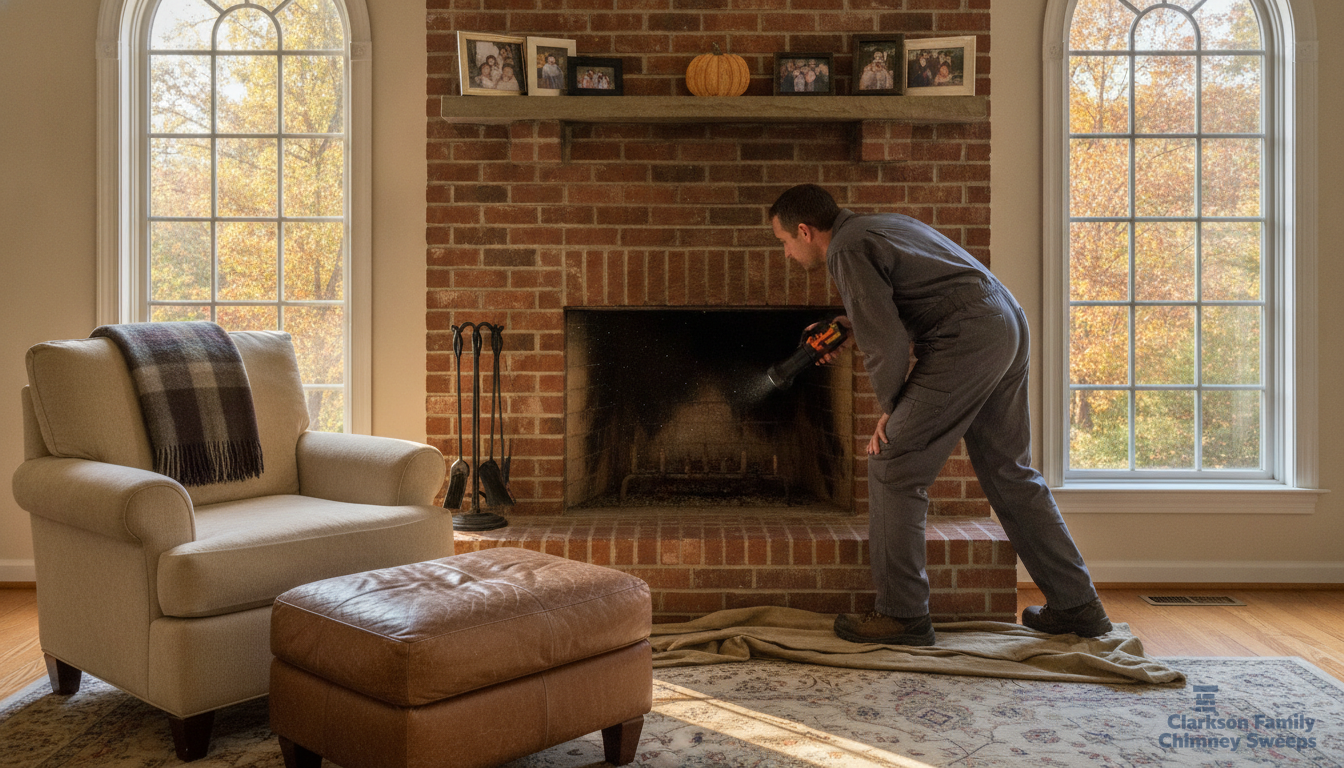
Why Fall Chimney Maintenance Matters in Charlotte, NC
Charlotte winters may be milder than those farther north, but the region's humidity, summer thunderstorms, and occasional freezing temperatures take a real toll on masonry chimneys. By the time October arrives and homeowners start thinking about cozy fires, their chimney systems have spent months absorbing moisture, baking in heat, and potentially hosting wildlife. Skipping your annual fall chimney checkup isn't just an oversight — it's a genuine fire and carbon monoxide risk.
At Clarkson Family Chimney Sweeps, we serve homeowners across Charlotte seven days a week from 8 AM to 6 PM, and fall is our busiest season for good reason. Here's the complete checklist we recommend before you burn your first log of the year.
Step 1: Schedule a Professional Chimney Sweep and Cleaning
Creosote — the tarry, flammable byproduct of wood combustion — accumulates on the inside of your flue every time you burn wood. Even a relatively light coating of creosote can ignite if temperatures inside the flue spike, and third-degree glazed creosote is notoriously difficult to extinguish once it catches. The National Fire Protection Association (NFPA 211) recommends at least one professional cleaning per year for any wood-burning fireplace or stove.
Our technicians use professional-grade rotary brushes and HEPA-filtered vacuums so the process is clean and efficient inside your home — no mess left behind. Learn more about what's included in our chimney sweep and cleaning service, or book an appointment for your home in Dilworth, Myers Park, or anywhere across Mecklenburg County.
Step 2: Get a Level 1 Chimney Inspection While You're At It
A cleaning appointment is the perfect time to pair in a Level 1 inspection. While our technicians are already in your firebox and at the roofline, they'll examine the accessible portions of your flue, smoke chamber, damper, and exterior masonry for early signs of trouble. Catching a cracked tile, deteriorated mortar joint, or stuck damper in October costs far less to address than waiting until January when damage has progressed.
If you've recently bought a home — especially the vintage Craftsman and bungalow-style homes common in Plaza Midwood and Dilworth — a Level 2 video inspection is strongly recommended. Read about all three inspection levels and what they cover on our chimney inspection page.
Step 3: Check Your Chimney Cap and Damper
After a full summer of thunderstorms, hail, and the occasional falling branch, your chimney cap may be dented, rusted, or missing altogether. A damaged or absent cap lets every rainstorm drive water directly into your flue — corroding the damper, soaking the smoke chamber masonry, and accelerating liner deterioration. Check from the ground or ask our technicians to check while on the roof.
While you're evaluating your cap, consider whether your throat damper still seals properly. Many older Charlotte homes in neighborhoods like Cotswold and SouthPark have original cast-iron dampers that no longer form a tight seal, allowing conditioned air to escape your home year-round. Upgrading to a top-sealing damper eliminates that draft completely. Explore options on our chimney cap and damper installation page.
Step 4: Look for Visual Warning Signs of Chimney Damage
Walk around the exterior of your home and look at your chimney with fresh eyes. Warning signs that warrant a professional repair assessment include:
- White staining (efflorescence) on brick faces — a sign that water is moving through the masonry
- Crumbling, missing, or darkened mortar joints
- Chipped or spalling bricks on the chimney exterior
- A cracked or missing chimney crown at the top
- Moisture, staining, or a musty smell inside the firebox
- Visible daylight or draft coming from the damper when it's closed
If you spot any of these, our chimney repair team can assess the damage and restore structural integrity before winter use makes it worse. Many repair needs — especially mortar tuckpointing and crown repairs — are best addressed in fall when temperatures are consistently above 40°F for proper mortar curing.
Step 5: Consider Waterproofing Before the Rain Returns
After repairs are complete and your masonry is structurally sound, fall is the ideal time to apply a penetrating water repellent treatment. Charlotte's frequent rain events mean waterproofing isn't a luxury — it's proactive maintenance that consistently reduces long-term repair costs. Our professional-grade repellents are vapor-permeable, meaning they block liquid water infiltration while still allowing trapped moisture to escape. A single application typically lasts 5 to 10 years.
Learn more about how we protect Charlotte masonry on our chimney waterproofing page, and ask about bundling waterproofing with your fall cleaning and inspection for a discounted combined visit.
Book Your Fall Chimney Service Today
Clarkson Family Chimney Sweeps is available Monday through Sunday from 8 AM to 6 PM to help Charlotte homeowners get their fireplaces ready for the season. We serve all neighborhoods across the city and surrounding Mecklenburg County communities. Call us at +1 (980) 980-1659 or email [email protected] to schedule your appointment. Don't wait until the first cold snap — our fall schedule fills up fast.
Discuss This With Our Team
Call +19809801659 or fill out our online form for a free, no-obligation quote.
Request Free Quote